
A stop work order in Parrish, FL stops all construction activity immediately, whether the project is a new build, an addition, or a repair, and it stays in effect until the underlying permit violation is corrected and re-inspected. Manatee County issues these notices when work proceeds without a permit, deviates from approved plans, or fails a required inspection, and ignoring the order lets fines accumulate while the project sits idle. The fastest way to lift a Parrish stop work order is to correct the violation and file the retroactive permit through a licensed contractor. As a licensed Florida General Contractor (CGC1524141) and Plumbing Contractor (CFC1430823), our team handles both the permitting and the physical repair needed to resolve the violation.
Table of Contents
- Why Parrish, FL Homeowners Receive Stop Work Orders
- What Happens When a Stop Work Order Is Issued in Manatee County
- Step-by-Step Process to Resolve a Stop Work Order in Parrish
- Costs of Resolving a Stop Work Order in Parrish, FL
- How a Stop Work Order Affects Selling Your Parrish Home
- How to Avoid a Stop Work Order in the First Place
- Frequently Asked Questions About Stop Work Orders in Parrish, FL
- Get Professional Stop Work Order Assistance in Parrish, FL
Why Do Parrish, FL Homeowners Receive Stop Work Orders?
Manatee County Development Services holds sole authority over all permitting in unincorporated Parrish. There is no city building department to appeal to, no municipal shortcut to take. This catches many homeowners off guard, especially those who have moved from incorporated cities where a local building official handles permits. In Parrish, the county is the only voice that matters.
The most common trigger for a stop work order is straightforward: starting construction without pulling the required permits. Any project that touches plumbing, electrical, or structural elements demands a permit before the first hammer swings. Homeowners sometimes assume a small bathroom update or a kitchen reconfiguration falls below the threshold. It does not. If you moved a sink drain, added an outlet, or removed a load-bearing wall without county approval, you are exposed.

A second frequent trigger involves scope creep. A homeowner pulls a permit for a kitchen remodel, then decides to add a powder room while the walls are open. That additional plumbing work exceeds the original permit, and an inspector who arrives expecting a kitchen rough-in will spot the unapproved bathroom rough-in immediately. The result is the same: a stop work order posted on site.
A third cause lands squarely on contractors who fail to schedule required inspections at the correct stages. When drywall goes up before the rough-in inspection, the county cannot verify what is behind it. The inspector will not take the contractor’s word. They will issue a stop work order and require the walls to come back down.
Less common but equally serious triggers include safety violations spotted during a routine drive-by inspection or a complaint from a neighbor. Manatee County investigates tips, and an active job site with no visible permit card invites scrutiny.
What Happens When a Stop Work Order Is Issued in Manatee County
The moment a stop work order is posted, all construction activity must cease. Continuing work after receiving the order triggers escalating daily fines, and Manatee County does not waive these penalties lightly. Every day you delay resolution adds to the financial burden.
The order itself becomes a formal public record. Manatee County Development Services files the notice against the property, creating a paper trail that title companies, lenders, and prospective buyers will find. This is not a private matter between you and the county. It is a cloud on your property’s title that must be cleared before any sale can close.
The county may require you to open finished walls, remove flooring, or expose foundations so inspectors can verify compliance. If you have already installed drywall, tile, or cabinetry over unpermitted plumbing or electrical work, expect to lose those finishes. The inspector needs to see the work, and they will not approve what they cannot inspect.
You cannot legally sell the property while the stop work order remains unresolved and permits stay open. Even if a buyer were willing to accept the property as-is, most lenders will refuse to fund a mortgage on a home with active code violations. The sale stalls until you fix the problem.
Finally, the county will require a retroactive permit application. This process is more expensive and more rigorous than pulling a permit upfront. You will pay penalty fees, and the plans examiner will scrutinize the as-built conditions more carefully than they would have reviewed the original plans.
How Do You Resolve a Stop Work Order in Parrish?
Step 1: Identify the Exact Violation
Your first call should be to Manatee County Development Services. Request the specific violation notice, not just the posted order on your door. The violation notice details exactly which code sections were violated and what work triggered the order. Without this document, you are guessing at the solution.
If you had a permit, pull the original approved plans and compare them to what was actually built. The discrepancy between the two is the core of your problem. Take clear photographs of all work in question before making any changes. Documentation protects you if questions arise later about what was built when.
Step 2: Hire a Licensed Contractor Who Works with Manatee County
Not all contractors are equal when it comes to resolving stop work orders. You need someone who pulls permits in Manatee County regularly and understands the specific inspection protocols that county inspectors follow. A contractor who works mostly in Sarasota or Hillsborough may not know the nuances of Manatee County’s process.
Verify that any contractor you hire holds a valid Florida license and is registered to pull permits in Manatee County. Ask directly about their experience resolving stop work orders. This is a specialized skill set that involves negotiating with inspectors, preparing as-built drawings, and coordinating re-inspections on an accelerated timeline. A contractor who only builds new homes may not have this experience.
Step 3: Submit a Retroactive Permit Application
The county will require detailed as-built drawings showing exactly what was constructed. These drawings document the work as it exists, not as it was originally planned. For structural changes, you may need engineer-stamped plans, which adds both cost and time to the resolution process.
Expect higher fees than if you had pulled the permit before starting. Manatee County charges penalty rates for retroactive permits, typically two to three times the standard permit fee. This is not negotiable. The county views it as a deterrent against skipping the permit process in the first place.
Step 4: Schedule and Pass All Required Inspections
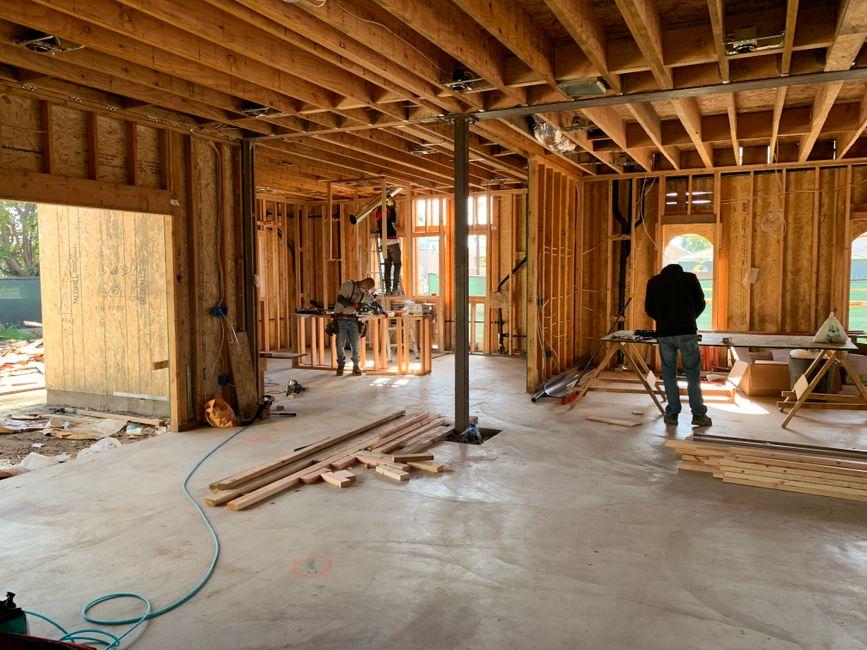
Once the retroactive permit is issued, you must schedule every inspection that would have been required during normal construction. Inspectors will check every system touched by the work: framing, electrical, plumbing, and mechanical. If walls are already closed, you will need to provide access points. The county may require you to cut openings at specific locations so the inspector can verify what is behind the drywall.
Pass all inspections to receive final approval. Only then will Manatee County Development Services lift the stop work order and close the permit. Keep every piece of paperwork. You will need it when you sell the property.
Costs of Resolving a Stop Work Order in Parrish, FL
The financial impact of a stop work order hits from multiple angles. Retroactive permit fees in Manatee County typically run two to three times the original permit cost. A permit that would have cost $400 might now cost $1,200 before you even address the physical work.
Contractor fees for preparing as-built documentation and coordinating inspections add another layer. Depending on the complexity of your project, expect to pay between $500 and $2,000 for this service alone. If structural changes require an engineer’s stamp, that cost increases.
The most painful expense often comes from opening finished walls and redoing work that was already completed. Removing and replacing drywall, flooring, or cabinetry to expose plumbing and electrical runs can cost anywhere from $1,000 to $5,000. If the inspector finds code violations behind those walls, the repair costs climb higher.
Manatee County can assess daily fines that accumulate until the order is resolved. These fines vary based on the severity of the violation, but they do not stop until you fix the problem.
Real-world examples from the local market illustrate the stakes. One Parrish seller lost $15,000 in price concessions when unpermitted work surfaced during a home sale. The buyer’s lender refused to move forward until the violations were addressed, and the seller had to pay to keep the deal alive. For a typical residential stop work order resolution, the total cost ranges from $3,000 to well over $10,000, depending on the scope of the unpermitted work and how much finished material must be removed for inspection.
How a Stop Work Order Affects Selling Your Parrish Home
A stop work order does not just halt your renovation. It freezes your ability to sell the property on normal terms. Title companies and lenders flag open permits and unresolved violations during the closing process. Once flagged, the transaction cannot proceed until the order is cleared.
Buyers’ home inspectors are trained to spot unpermitted work. They compare the visible condition of the home against county permit records, and discrepancies trigger alarm bells. When an inspector notes that a bathroom was added without a permit, the buyer’s agent will demand answers. The result is often a renegotiation or a cancelled contract.
Lenders protect their investment by refusing to fund mortgages on properties with active code violations. Even cash buyers may walk away rather than inherit an unresolved county enforcement action. The pool of willing buyers shrinks dramatically.
Florida law requires sellers to disclose known unpermitted work. Failing to disclose a stop work order or unpermitted construction exposes you to legal liability after the sale. Silence is not a strategy.
In the best-case scenario, you negotiate a credit to the buyer covering 50 to 100 percent of the estimated resolution cost. In the worst case, the sale collapses entirely, and you must resolve the order before relisting. Either way, the stop work order costs you time, money, and leverage at the negotiating table.
How to Avoid a Stop Work Order in the First Place
Prevention is far cheaper than resolution. Before starting any project, verify permit requirements directly with Manatee County Development Services. Do not rely on a contractor’s assumption that something is exempt. A five-minute phone call can save you thousands of dollars and weeks of delay.
Know the bright line between cosmetic updates and permitted work. Painting, wallpaper, flooring replacement, cabinet installation, and countertop replacement generally do not require permits. Anything that touches plumbing, electrical, or structural elements does. If you are moving a sink, adding an outlet, removing a wall, or altering rooflines, you need a permit.
Use only licensed contractors who pull permits in their own name. If a contractor suggests skipping permits to save time or money, find another contractor. The risk lands entirely on you as the property owner, not on the person who suggested the shortcut.
Schedule inspections at every required stage and confirm they actually happen. Do not let your contractor close up walls before the rough-in inspection is signed off. A contractor who “forgets” this step is creating a problem you will pay to fix.
If you are an out-of-town investor, understand that Manatee County enforces its rules strictly. What passes in other Florida counties may not pass here. The county does not care that your contractor in Miami said it was fine. Local rules govern local projects.
Frequently Asked Questions About Stop Work Orders in Parrish, FL
What happens if an inspector finds unpermitted work in Parrish?
The inspector will issue a stop work order immediately and post it on the property. You must stop all work at once. The county will require you to obtain a retroactive permit and may direct you to expose hidden work so they can inspect it. Continuing construction after the order is posted triggers daily fines that accumulate until you comply.
Can you sell a house with unpermitted work in Florida?
Technically, yes, you can list a property with unpermitted work. In practice, most buyers and lenders will require resolution before closing. You may need to offer significant price concessions or complete the retroactive permitting process to satisfy the buyer’s lender. Florida law also requires you to disclose known unpermitted work, so hiding it is not an option.
What can a homeowner do without a permit in Manatee County?
Cosmetic updates are generally exempt. This includes painting, wallpaper, carpet and flooring replacement that does not involve structural changes, cabinet replacement, and countertop replacement. Minor repairs like replacing fixtures with like-for-like models, patching drywall, and repairing fences under six feet typically do not require permits. Always call Manatee County Development Services to confirm your specific project. Rules change, and exceptions exist.
What is the penalty for building without a permit in Florida?
Penalties include an immediate stop work order, daily fines that vary by county, double or triple permit fees for retroactive applications, and forced rework to expose concealed systems for inspection. Manatee County can also place a lien on the property for unpaid fines or unresolved violations, which clouds your title and blocks any sale until the lien is satisfied.
Get Professional Stop Work Order Assistance in Parrish, FL
Resolving a stop work order requires familiarity with Manatee County’s specific procedures, inspectors, and documentation requirements. Code Violation Contractor specializes in navigating this exact process for Parrish homeowners. We handle the county paperwork, coordinate with inspectors, and manage the rework so you can move forward without guessing at each step. If you have a violation notice and need a clear path to resolution, reach out for a consultation. We will review your situation and outline exactly what it will take to get your project back on track and your property compliant.

0 Comments