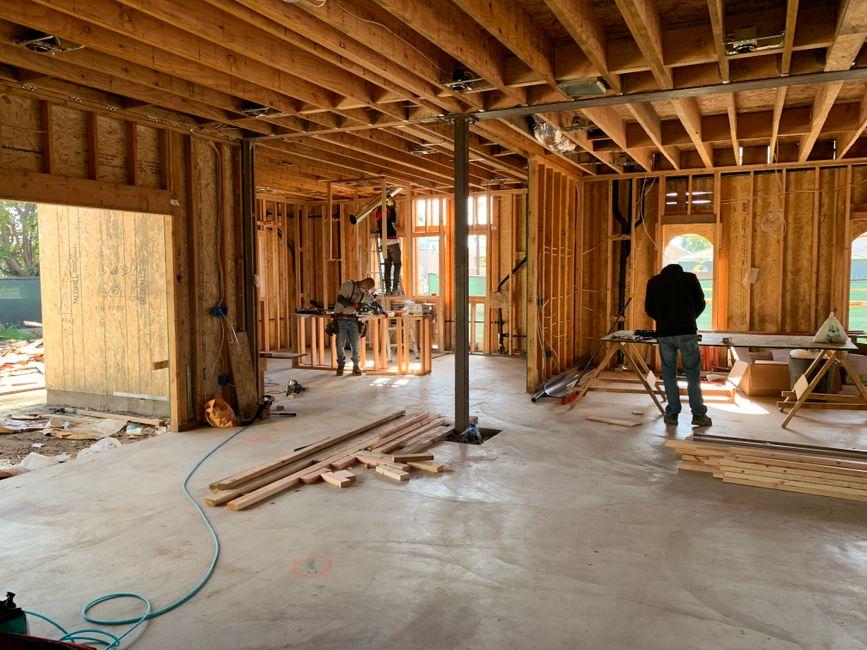
You are standing on your half-framed lot in Sarasota, staring at a bright red stop work order stapled to the studs. The plumbing rough-in inspection failed because a cleanout was placed six inches too close to the foundation wall. Your general contractor blames the plumbing subcontractor. The plumber says the GC never provided the updated slab plans. Meanwhile, the concrete pour is scheduled for Thursday, the framers have moved to another job, and your six-month build just became a nine-month headache with no end in sight.
Table of Contents
- Why Sarasota New Construction Demands a Different Licensing Approach
- The Rough-In Bottleneck: How Dual Licensing Eliminates Scheduling Conflicts
- Slab and Under-Slab Plumbing: Getting It Right Before the Pour
- Final Inspections and Code Compliance: Single-Source Accountability
- Avoiding Stop Work Orders and Code Violations in Sarasota
- What to Look for When Hiring a Sarasota New Construction Contractor
- Frequently Asked Questions About Plumbing Licensing for New Construction
- Start Your Sarasota New Build with a Contractor Who Holds Both Licenses
This scenario plays out more often than anyone in the building industry likes to admit. It is also entirely avoidable. The solution starts with a single hiring decision that most homeowners never think to ask about: choosing a Sarasota new construction contractor plumbing license holder who carries both a Certified General Contractor license and a Certified Plumbing Contractor license under the same roof. When one builder is legally and professionally responsible for both the structure and the plumbing from day one, the finger-pointing stops, the inspection calendar tightens up, and the project moves forward without the trade conflicts that derail so many new builds in Sarasota County.
Why Sarasota New Construction Demands a Different Licensing Approach
Sarasota is not like building on high, dry ground in central Florida. The water table sits close to the surface across much of the county, flood zone designations shape foundation elevations, and FEMA compliance is non-negotiable. These conditions make the plumbing rough-in and under-slab work the most consequential early phase of any new home or major addition. A mistake buried under four inches of concrete is not a quick fix, it is a core drill, a slab break, and a five-figure change order.
When a general contractor subcontracts the plumbing, the chain of command splits. The GC manages the framing, the concrete, and the schedule, but the plumbing license belongs to a separate company with its own priorities, its own crew availability, and its own interpretation of the plans. If something goes wrong, the homeowner is stuck in the middle of two businesses arguing over who caused the delay.
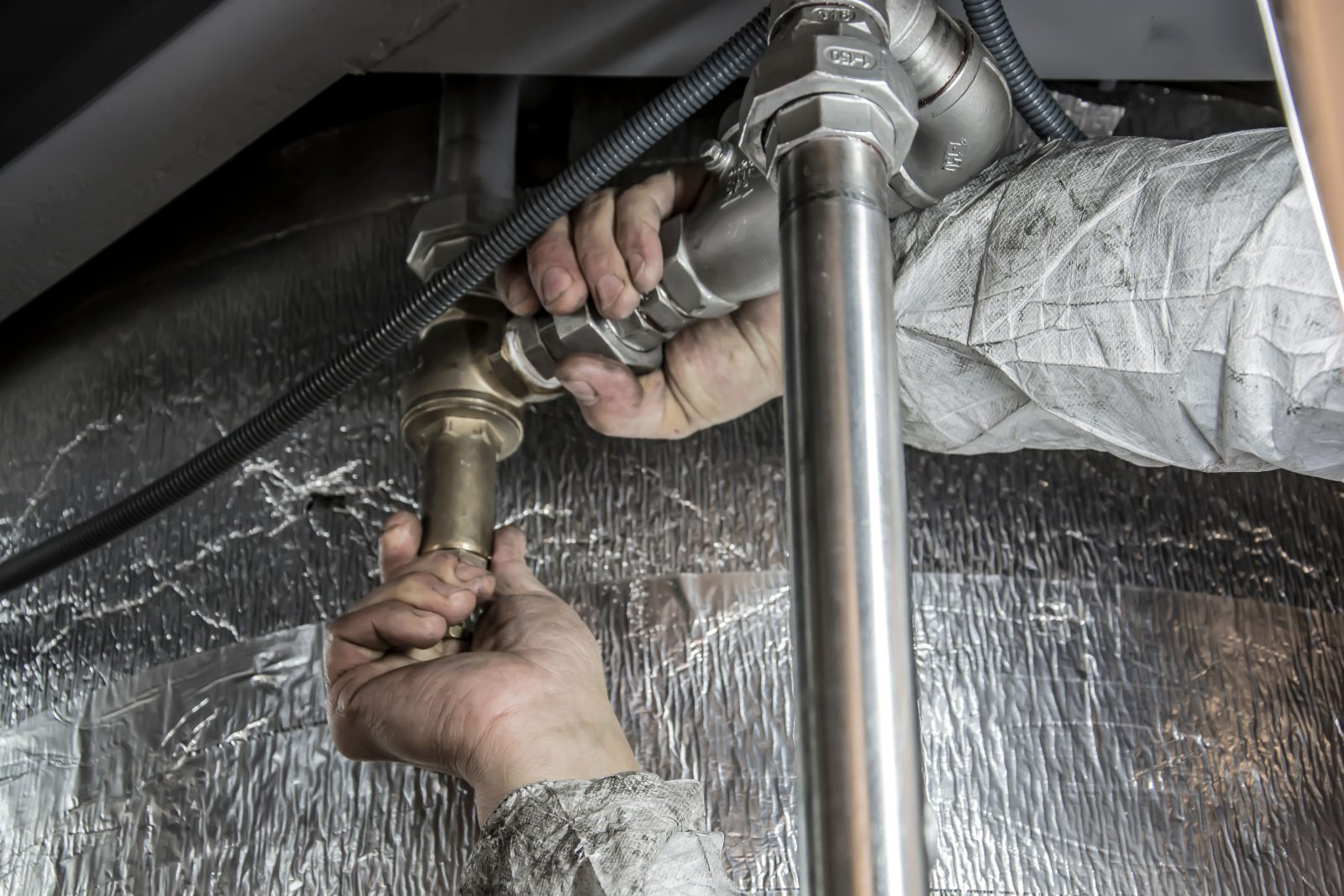
Florida law makes this distinction clear. A general contractor cannot legally pull a plumbing permit unless they hold a separate Plumbing Contractor license issued by the Florida Construction Industry Licensing Board. This is one of the most searched questions in the state, and the answer is unambiguous: no plumbing license, no plumbing permit, period. When a builder holds both certifications, the Sarasota new construction contractor plumbing license requirement is satisfied in-house. The person managing the schedule is also the person whose name appears on the plumbing permit. There is no unregistered sub, no question about whether the plumber is properly licensed for the jurisdiction, and no gap in accountability.
The practical benefits go deeper than paperwork. Slab-on-grade foundations, the standard for most Sarasota new construction, demand that every waste line, water supply line, and cleanout be positioned with millimeter precision before the rebar goes in and the concrete truck arrives. A dual-licensed GC understands how the plumbing layout interacts with the structural engineering. They know that a four-inch sewer line cannot run through a grade beam, that PEX supply lines need proper sleeving where they penetrate the slab, and that the cleanout location must satisfy both the plumbing code and the practical reality of future access. When one mind holds both sets of knowledge, these conflicts are resolved on the plan, not discovered during inspection.
The Rough-In Bottleneck: How Dual Licensing Eliminates Scheduling Conflicts
Ask any Sarasota builder what phase causes the most schedule slippage, and the answer is almost always the rough-in. This is the stage where drain, waste, and vent lines run through stud bays, water supply lines snake from the main to every fixture location, and vent stacks rise through the roof. Framers, electricians, and plumbers all need access to the same walls at roughly the same time, and the inspection sequence demands that each trade's work be complete before the next can be signed off.
When the plumber is a subcontractor, the GC has to slot them into a schedule that also accommodates the framing crew, the electrician, and the HVAC installer. The plumber may be finishing another job across town, short a crew member, or simply booked three weeks out. The result is trade stacking: framers waiting on plumbers, electricians working around incomplete plumbing, and inspection windows that open and close without anyone being ready to call for the inspector.
A builder who holds a plumbing license controls the entire sequence. The rough-in can be scheduled to happen the same week as framing completion, not two or three weeks later. The builder can walk the site, verify that every stud penetration, every pipe slope, and every vent termination is correct, and then immediately call for the plumbing rough-in inspection. There is no phone tag with a sub's office, no waiting for a crew to free up, and no missed inspection dates.
Sarasota County's virtual inspection program adds another layer of efficiency for a dual-licensed contractor. The county offers VuSpex live virtual inspections for plumbing sewer and water work, allowing an inspector to review the installation remotely via video call. A GC who is also the plumbing contractor can request these inspections same-day, walk the site with a phone or tablet, and get approval without waiting for a sub to be available to meet the inspector on site. For a homeowner, this means the difference between a build that stays on a six-to-nine-month timeline and one that drifts past the twelve-month mark while everyone waits for someone else to show up.
Slab and Under-Slab Plumbing: Getting It Right Before the Pour
The under-slab plumbing phase is the point of no return in a Sarasota new build. Once concrete covers the pipes, any error becomes exponentially more expensive to fix. The building department requires that all under-slab plumbing, including waste lines, water supply lines, and cleanouts, be inspected and approved before the concrete pour can proceed. This is not a suggestion, it is a hard stop. Pour without approval, and you will be breaking out fresh concrete at your own expense.
A dual-licensed GC approaches this phase with both the structural and plumbing codes in mind. The rebar grid that reinforces the slab must coexist with the plumbing layout. Pipes placed too close to the surface risk cracking under load or thermal expansion. Pipes that conflict with grade beams or footing reinforcement create a choice between weakening the structure or re-routing the plumbing, neither of which is cheap or fast. A builder who understands both disciplines can plan the layout so that the plumbing nestles into the slab without compromising the steel.
One of the most common failure points in Sarasota under-slab work is improper pipe sleeving. Where plumbing penetrates the slab or passes through foundation walls, the code requires protective sleeving to allow for movement and prevent shear damage. A plumber who does not understand the structural loads on a stem wall foundation may omit or undersize the sleeve. The inspector catches it, the pour is delayed, and if the concrete truck was already ordered, the cancellation fee lands on someone's change order. A dual-licensed GC verifies every penetration against the structural plans before calling for inspection, because they are signing off on both the plumbing and the foundation.
Weather adds another variable. Sarasota's summer afternoons bring thunderstorms that can flood an open excavation or ruin a fresh slab. Coordinating the plumbing inspection and the concrete pour on the same day, or within a tight window, requires a builder who can call both shots. When the GC is also the plumbing contractor, there is no gap between "plumbing approved" and "concrete ordered." The builder can have the pump truck scheduled, the inspector on site, and the crew ready to pour the moment the green tag is issued. That kind of coordination is nearly impossible when the plumber and the concrete sub work for different companies with different schedules.
Final Inspections and Code Compliance: Single-Source Accountability
The final plumbing inspection is often the last regulatory hurdle before the building department issues a Certificate of Occupancy. Every fixture must be installed, every trap must hold water, the water heater must be strapped and vented correctly, and the backflow prevention devices must be in place. If the inspector finds a violation, the GC has to call the plumbing sub back to correct it. If that sub is on another job, or worse, has gone out of business or left the state, the homeowner is stuck.
A dual-licensed GC can address minor plumbing issues on the spot. A missing backflow preventer on an irrigation line, an improperly terminated temperature and pressure relief valve on the water heater, or a vent stack that needs an additional support bracket, these are all items that a licensed plumbing contractor can correct immediately. The builder does not need to track down a subcontractor, negotiate a callback, or delay the final inspection by days or weeks.
Sarasota County enforces the 8th Edition 2023 Florida Building Code, with the 9th Edition taking effect in December 2026. The code is specific about water heater strapping requirements in hurricane zones, TPR valve discharge piping that must terminate outside the building at a safe location, and elevation requirements for exterior plumbing appliances in flood hazard areas. A builder who holds a plumbing license knows these requirements because they have passed the same plumbing contractor exam that tests them. They are not relying on a sub to know the code, they know it themselves.
When the final inspection passes and the CO is issued, the homeowner's warranty relationship is equally straightforward. There is one company to call for any issue, structural or plumbing. If a slab leak develops, there is no debate about whether the concrete cracked the pipe or the pipe leaked and eroded the concrete. One builder is responsible for both, and one builder fixes it. That single-source accountability is worth more than any line-item savings a homeowner might get by hiring a GC who shops out plumbing to the lowest bidder.
Avoiding Stop Work Orders and Code Violations in Sarasota
A stop work order brings a construction site to an immediate halt. No tools, no deliveries, no progress of any kind until the violation is corrected and the building department re-inspects. Each re-inspection carries a fee, and the delay pushes the completion date further out. For a homeowner paying a construction loan or carrying two mortgages, every week of delay costs real money.
The most common plumbing violations that trigger stop work orders in Sarasota include improper sewer line slope, missing or inaccessible cleanouts, water heaters installed below the base flood elevation in AE flood zones, and unpermitted plumbing work performed by unlicensed individuals. A dual-licensed GC eliminates the last category entirely, because the plumbing permit is pulled under their own license. There is no question about whether the person doing the work is properly credentialed.
Sarasota's flood zone requirements are particularly strict for exterior mechanical and plumbing equipment. In AE flood zones, which cover significant portions of the county, HVAC condensers, tankless water heaters, and other exterior appliances must be elevated above the base flood elevation. A GC who holds a plumbing license designs this elevation into the project from the start. The pad or platform is built to the correct height, the plumbing connections are routed accordingly, and the installation passes inspection the first time. A GC who subcontracts plumbing may not catch the elevation requirement until the sub points it out, by which point the pad is already poured at the wrong height.
Looking ahead, Florida HB 803 takes effect on July 1, 2026, bringing changes to permit exemptions and fee structures for single-family homes. Work valued under $7,500 on existing single-family residences will be exempt from permitting, and permits under $15,000 will require expedited review. These changes do not apply to new construction, which still requires full permitting and inspections. A dual-licensed GC navigates this regulatory landscape without confusion, because they deal with both the building and plumbing codes as a matter of daily practice.
What to Look for When Hiring a Sarasota New Construction Contractor
Most homeowners vetting builders ask about timeline, budget, and past projects. Few think to ask about licensing beyond confirming that the GC holds a valid state license. That is a missed opportunity to filter out the scheduling and accountability problems that plague new construction.
Start by verifying that the builder holds both a Certified General Contractor license, designated as CGC, and a Certified Plumbing Contractor license, designated as CPC, from the Florida Construction Industry Licensing Board. These are state-level certifications that allow the holder to work anywhere in Florida, including Sarasota County and the City of Sarasota. A registered license, by contrast, is restricted to specific local jurisdictions and does not carry the same breadth of authority.
Ask for proof of current workers' compensation and general liability insurance that covers both the general contracting and plumbing operations. This is a gap in much of the available licensing information online, but it matters. If a worker is injured on your job site and the contractor's workers' comp does not cover plumbing work because that trade was not disclosed to the insurer, the liability can cascade back to the homeowner. A properly insured dual-license holder has coverage that spans both trades.
Request references from recent new construction projects in Sarasota, and ask those references specifically about inspection timelines and code violation history. How many plumbing inspections failed on the first attempt? How long did the rough-in phase take from start to final approval? Did the builder handle plumbing corrections directly, or did they have to call in a sub? The answers will tell you whether the dual-license arrangement is a genuine operational advantage or just a credential on paper.
Finally, verify every license on the Florida Department of Business and Professional Regulation website at MyFloridaLicense.com. Look for any disciplinary actions, lapsed certifications, or complaints. A clean record across both license types is a strong indicator that the builder takes code compliance seriously.
Frequently Asked Questions About Plumbing Licensing for New Construction
Can a general contractor pull a plumbing permit in Florida? No. A general contractor cannot pull a plumbing permit unless they also hold a separate Plumbing Contractor license issued by the Florida CILB. This is one of the most common points of confusion in the industry, and the answer is settled law. If your GC tells you they can handle the plumbing without a plumbing license, verify that statement with the local building department before proceeding.
What is the new law for contractors' licenses in Florida? HB 803, signed into law and effective July 1, 2026, exempts certain work valued under $7,500 on existing single-family homes from permitting requirements and mandates expedited reviews for permits under $15,000. It also eliminates fee calculations based on the value of the work. New construction is not exempt and still requires full permitting.
How do I verify a Sarasota contractor's plumbing license? Visit the Florida DBPR website or MyFloridaLicense.com and search by the contractor's name or license number. Both the General Contractor and Plumbing Contractor licenses should appear as active and in good standing.
Start Your Sarasota New Build with a Contractor Who Holds Both Licenses
Building a new home or addition in Sarasota is a significant investment, and the last thing you need is a project stalled by trade conflicts, failed inspections, or stop work orders that could have been prevented. A contractor who holds both a General Contractor and Plumbing Contractor license brings the entire build under one point of accountability. Inspections move faster, scheduling conflicts disappear, and the person managing your project is the same person whose name is on the plumbing permit.
If you are planning a new construction project in Sarasota and want to work with a builder who eliminates the most common sources of delay and code violations, reach out for a new build consultation. We hold both licenses in-house, and we are ready to take your project from slab to certificate of occupancy without the finger-pointing. Contact us through our contact page to schedule your consultation and learn more about our services for new construction and major additions in Sarasota County.

0 Comments