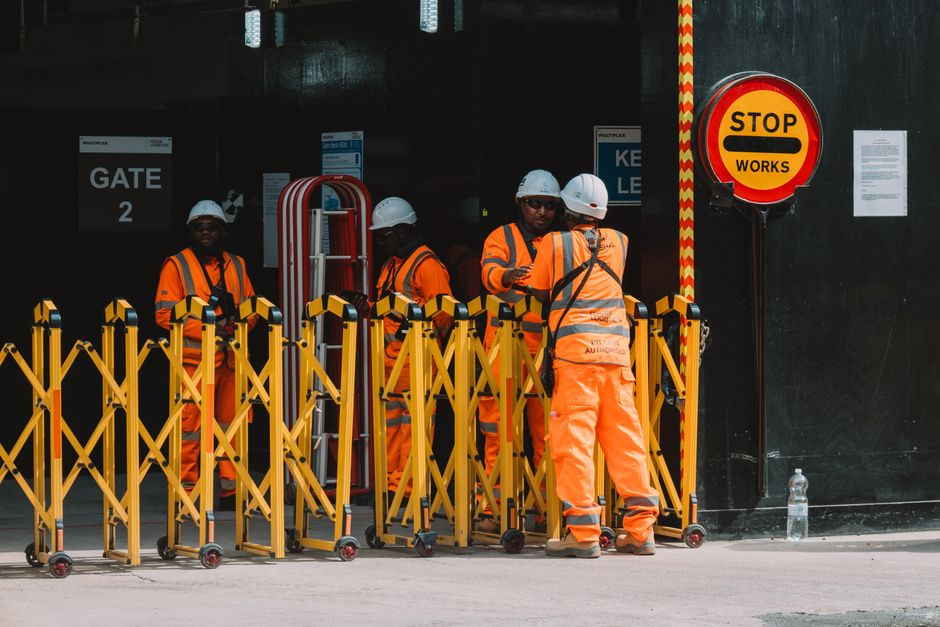
A stop work order in Englewood, FL stops all construction on a property immediately, and it remains active until the county confirms the underlying violation has been corrected and the project passes re-inspection. Most orders are triggered by unpermitted work, expired permits, or a failed inspection, and fines can accrue daily while the site sits idle. The fastest way to remove an Englewood stop work order is to correct the violation and file the right paperwork through a licensed contractor. As a licensed Florida General Contractor (CGC1524141) and Plumbing Contractor (CFC1430823), our team handles both the permitting and the physical repair needed to resolve the violation.
Table of Contents
- What Is a Stop Work Order in Englewood, FL? (2026 Legal Context)
- Common Reasons for Stop Work Orders in Englewood, FL
- Immediate Steps to Take After Receiving a Stop Work Order in Englewood
- How to Remove a Stop Work Order in Englewood, FL (Step-by-Step Process)
- Costs and Consequences of Ignoring a Stop Work Order in Englewood
- How Long Can a Stop Work Order Last in Florida? (2026 Data Gap)
- Preventing Stop Work Orders: Best Practices for Englewood Contractors (2026)
- Why Hire a Stop Work Order Removal Service in Englewood, FL?
- Frequently Asked Questions About Stop Work Orders in Englewood, FL
What Is a Stop Work Order in Englewood, FL?
A stop work order is a legally binding directive issued by a government authority that requires all construction activity on a specific site to cease immediately. It is not a warning, a suggestion, or a starting point for negotiation. When an SWO is posted on your property, every hammer swing, every wire pull, and every paint stroke that happens after that moment exposes you to escalating legal and financial risk.
In Englewood, Florida, the jurisdictional landscape is unique because the community straddles two counties. Depending on your exact location, your SWO may come from the Sarasota County Building Department or the Charlotte County Building Department. Both have authority to issue orders for unpermitted work, code violations, and safety hazards. Beyond the county level, the Florida Department of Business and Professional Regulation (DBPR) can issue SWOs for unlicensed contracting, and the Florida Division of Workers’ Compensation enforces orders under F.S. § 440.107 when employers fail to secure proper coverage for their workers.
The statutory language in F.S. § 440.107 is unambiguous: failure to secure workers’ compensation insurance is deemed an “immediate serious danger to the public health, safety, or welfare.” That classification gives the state broad power to shut down a job site without prior notice. Unlike a contractual stop work provision that might appear in a private agreement between an owner and a general contractor, a regulatory SWO carries the full weight of government enforcement. Continuing work after an SWO is issued can result in fines of $1,000 or more per day, criminal penalties in severe cases, and suspension or revocation of your contractor’s license. The order remains in effect until the issuing authority formally lifts it, and no amount of verbal assurance from a site supervisor changes that fact.
What Are the Common Reasons for Stop Work Orders in Englewood, FL?
Permit and Code Violations
The most frequent trigger for an SWO in Englewood is starting construction without the required building permits from Sarasota or Charlotte County. This happens more often than many contractors admit, sometimes because a homeowner pushed to skip the permit process to save money, or because a subcontractor began work before the general contractor’s permit was finalized. Either way, the liability lands on whoever is performing the work.
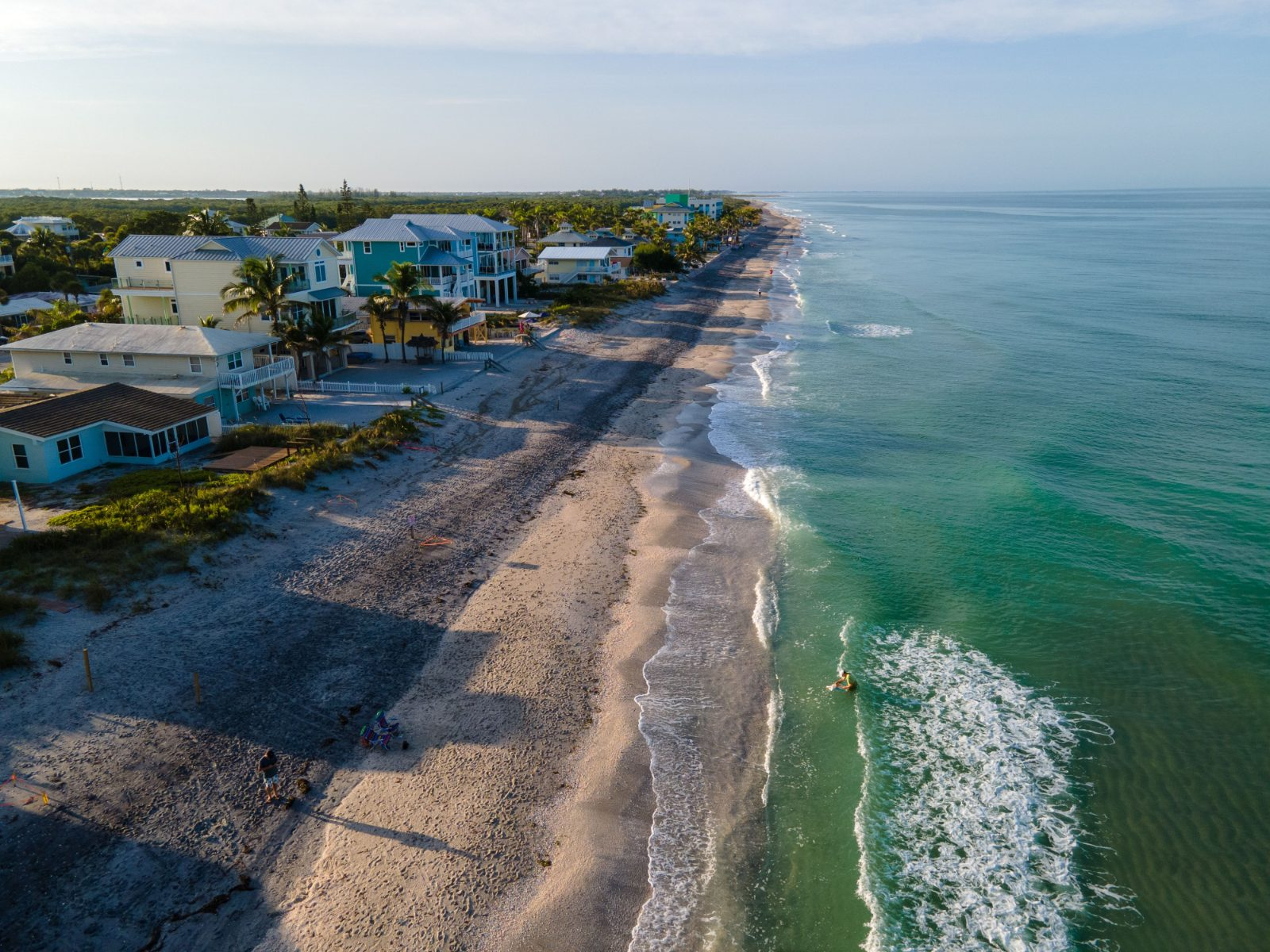
Deviating from approved plans is another common cause. If a field change increases square footage, alters structural elements, or violates setback requirements without an amended permit, a code enforcement officer can issue an SWO on the spot. The same applies to failing scheduled inspections. When an inspector arrives for a rough-in or framing inspection and finds the work covered up or inaccessible, the natural next step is a stop work order until the situation is corrected and the inspection can be completed.
Licensing and Workers’ Compensation Issues
Florida takes unlicensed contracting seriously, and the DBPR actively investigates complaints. If you or a subcontractor on your job site lacks a valid Florida contractor’s license for the scope of work being performed, an SWO is almost certain. This extends to expired licenses, licenses in the wrong classification, and situations where an individual is operating under another company’s license without proper registration.
Workers’ compensation violations are equally severe. Under F.S. § 440.107, any employer in the construction industry who fails to secure workers’ compensation coverage for employees faces an immediate stop work order. The state does not need to prove an injury occurred; the mere absence of coverage is sufficient. This applies even if you have only one employee and even if that employee is a family member. Expired or insufficient general liability insurance can also trigger action, though this typically comes through the local building department rather than the Division of Workers’ Compensation.
Safety and Hazard Violations
Unsafe job site conditions can bring an SWO from multiple directions. OSHA has jurisdiction over workplace safety and can order work stopped when it identifies imminent danger situations such as inadequate fall protection, unprotected trench excavations, or exposed electrical hazards. Local fire marshals have parallel authority for fire code violations, including blocked egress paths, missing fire extinguishers, and improper storage of flammable or combustible materials. In Englewood’s coastal environment, additional scrutiny may apply to job sites where hurricane preparedness measures are lacking or where construction debris creates a windborne hazard.
Immediate Steps to Take After Receiving a Stop Work Order in Englewood
The moment an SWO is posted on your job site, your response must be immediate and methodical. The first step is obvious but worth stating clearly: stop all work. Send every worker home. Lock the gates. Post the order conspicuously. Any continued labor, even “just cleaning up,” increases your daily fine exposure and can be used as evidence of willful non-compliance if the case escalates to court.
The second step is to identify exactly who issued the order. Look at the header of the document. If it came from the Sarasota County Building Department, your resolution path runs through their office at 941-861-6700. If it came from Charlotte County, you will deal with their building department. A DBPR order has a different appeals process than a Workers’ Compensation Division order. Each agency has its own forms, deadlines, and re-inspection procedures, and confusing them will cost you time you do not have.
Third, read every line of the order to understand the specific violations cited and any deadlines mentioned. Florida law gives employers served with a workers’ compensation SWO exactly 21 days to initiate an administrative hearing. Other types of SWOs may have different or shorter timelines, and missing a deadline can waive your right to challenge the order. Note the contact person, the case number, and the exact code sections referenced.
Fourth, secure and document the job site. Take dated photographs of every area mentioned in the order. Write a brief narrative of the site conditions as they exist right now. This documentation serves multiple purposes: it protects you if conditions change before a re-inspection, it helps your attorney or compliance specialist understand the scope of the problem, and it creates a record for any insurance or bond claims that may follow.
Fifth, contact a specialized stop work order removal service or an attorney with specific experience in Florida construction law. Do not attempt to call the inspector and explain your way out of the situation. Anything you say can be used to support additional violations or penalties. Let a professional who understands the local bureaucracy, the statutory framework, and the negotiation landscape handle the communication from this point forward. For complex cases involving multiple agencies, the value of experienced representation cannot be overstated. You can learn more about how professional violation resolution works on the services page of a qualified contractor.
How to Remove a Stop Work Order in Englewood, FL (Step-by-Step Process)
Correcting the Violation
The core of any SWO resolution is fixing whatever triggered the order in the first place. For permit issues, this means submitting the correct plans to the building department, paying any back-permit fees and penalty assessments, and waiting for plan approval before scheduling a re-inspection. In some cases, you may need to expose work that was covered up so the inspector can verify compliance, which adds time and labor cost to the correction process.
For licensing violations, the fix depends on the specific problem. If your license lapsed, you must renew it with the DBPR and provide proof of active status. If you were performing work outside your license classification, you must either demonstrate that the work falls within your scope or hire a properly licensed contractor to assume responsibility for that portion of the project. The new contractor will need to pull permits in their name and accept liability for the completed and remaining work.
For workers’ compensation violations, you must secure coverage immediately through a Florida-approved carrier and submit proof of coverage to the Division of Workers’ Compensation. The proof must show effective dates, policy numbers, and coverage amounts that meet statutory minimums. The division will verify the policy directly with the carrier before lifting the order, so do not expect same-day resolution on this type of violation.
Scheduling Re-Inspections and Hearings
Once the violation is corrected, contact the issuing office to schedule a re-inspection. For Sarasota County building code SWOs, call the building department directly. Have your case number ready and be prepared to provide evidence that the violation has been addressed. The re-inspection is not a formality; the inspector will verify every item on the original order, and any remaining deficiency can extend the SWO and trigger additional penalties.
For DBPR or Workers’ Compensation SWOs, the process may involve an administrative hearing rather than a field inspection. You have 21 days from the date of the order to request this hearing, and failing to do so makes the order final and non-appealable. At the hearing, you present evidence of compliance and argue for the order to be lifted. An attorney experienced in Florida administrative law can make a significant difference in how quickly and favorably these hearings conclude.
After the re-inspection passes or the hearing officer rules in your favor, the issuing authority will issue a formal release or lift of the SWO. This document is your proof that work can resume legally. Post it on the job site next to your permits and licenses.
Documentation and Closeout
Obtain a signed release letter or permit re-activation notice from the issuing authority. Keep this document with your project records permanently. If you sell the property, the buyer’s title search may uncover the SWO, and you will need proof of resolution to avoid clouding the title. Failure to properly close out an SWO can result in special assessment liens against the property, as seen in Tampa’s municipal enforcement procedures, and similar lien authority exists in Sarasota and Charlotte Counties.
Costs and Consequences of Ignoring a Stop Work Order in Englewood
The financial impact of ignoring an SWO compounds quickly. Daily fines of $1,000 or more are common across Florida jurisdictions, and these accrue every calendar day, including weekends and holidays, until the violation is corrected and the order is lifted. A two-week delay in addressing a violation can generate $14,000 in fines alone, before accounting for any of the other costs.
Project delays create a cascade of secondary expenses. Labor crews must be paid or laid off. Equipment rentals continue accruing charges. Materials stored on site are exposed to weather and theft. If your contract includes liquidated damages for late completion, those penalties begin accumulating. The owner may also have claims for lost revenue if the project is a commercial space or rental property.
Legal escalation is the next stage for unresolved violations. The case can proceed to a hearing before a Special Magistrate, who has the authority to impose additional fines and order compliance. From there, it can move to civil court, where the county can seek judgments and place special assessment liens on the property. These liens survive property transfers and can eventually lead to foreclosure.
The insurance consequences are equally severe. A stop work order is a material fact that must be reported to your general liability carrier. Non-disclosure can void coverage. Even with disclosure, an SWO can trigger non-renewal at the end of the policy period, increase premiums substantially, or cause a performance bond surety to withdraw support. The Florida DFS Stop-Work Order Database is public and searchable, updated every business day by 8:00 AM, and contains records going back to January 1, 2004. Any active SWO against your company is visible to potential clients, lenders, and insurers.
How Long Can a Stop Work Order Last in Florida? (2026 Data Gap)
One of the most common questions contractors ask when an SWO hits their job site is how long it will last, and the honest answer is that no fixed expiration date exists. An SWO remains in effect until the issuing authority is satisfied that the violation has been corrected and formally lifts the order. There is no statutory maximum duration, and an order does not expire simply because time has passed.
For simple permit violations where the correction involves submitting paperwork and paying fees, resolution can happen in three to ten business days. The limiting factor is usually the availability of a re-inspection appointment. For workers’ compensation violations, the timeline depends on how quickly you can secure coverage and how long the Division of Workers’ Compensation takes to verify the policy, which typically adds several business days after you submit proof.
Complex safety violations or licensing issues can extend the SWO for weeks or even months. If structural modifications are required to bring work into code compliance, the timeline stretches to accommodate engineering reviews, plan approvals, and the actual construction work. During this entire period, the SWO remains active, and no other work on the site can proceed. This is why speed in the initial response matters so much: every day of delay in starting the correction process is a day added to the total downtime.
Preventing Stop Work Orders: Best Practices for Englewood Contractors (2026)
Prevention is far cheaper than cure, and a disciplined pre-construction routine eliminates most SWO risks. Before any work begins, verify that all required permits are issued and posted on site. Check that every contractor and subcontractor holds a valid Florida license in the correct classification for their scope of work. Confirm that workers’ compensation and general liability policies are current and that certificates of insurance are on file.
Post permits and licenses visibly at the job site entrance. This is a strategic recommendation from top Florida construction law firms, and it serves two purposes: it demonstrates good-faith compliance to any inspector who visits, and it makes it easy for your team to verify that everything is in order. Schedule inspections proactively rather than waiting for a code enforcement officer to arrive unannounced. If you know a rough-in inspection is needed, book it as soon as the work is ready rather than pushing forward and hoping no one notices.
Conduct weekly safety audits that address the most common hazard categories: fall protection, electrical safety, fire prevention, and trenching and excavation. Document these audits with dated checklists and photographs. If an OSHA inspector or fire marshal visits, being able to show a consistent safety record can make the difference between a warning and an SWO. Before hiring any subcontractor, search the Florida DFS Stop-Work Order Database to check whether they have active orders against them. Bringing a subcontractor with an unresolved SWO onto your site can create liability for you and potentially trigger a new order against your project.
Why Hire a Stop Work Order Removal Service in Englewood, FL?
The bureaucracy of code enforcement does not move at the speed of construction, and navigating it without experience costs time and money. A specialized stop work order removal service understands the specific procedures, personnel, and unwritten rules of the Sarasota and Charlotte County building departments. They know which forms to file, which phone numbers to call, and how to sequence corrections and re-inspections for the fastest possible resolution.
Legal navigation is equally important. If your SWO involves the DBPR or the Division of Workers’ Compensation, you are dealing with state agencies that have formal administrative hearing procedures and strict deadlines. Missing the 21-day hearing request window for a workers’ comp SWO forfeits your right to challenge the order entirely. A professional service ensures that every deadline is met and that your case is presented effectively.
The cost calculation favors professional help in most scenarios. If daily fines are accruing at $1,000 per day, cutting just one week off the resolution timeline saves $7,000, which often exceeds the entire service fee. Add in the avoided costs of extended equipment rentals, idle labor, and potential liquidated damages, and the return on investment becomes clear. Proper documentation of the resolution also protects you against future title issues and insurance complications. If you need to discuss a specific situation, the contact page provides a direct line to professionals who handle these cases daily.
Frequently Asked Questions About Stop Work Orders in Englewood, FL
Q: Is a stop work order serious?
Yes. A stop work order is one of the most serious enforcement actions a government agency can take against a construction project. Continuing work after an SWO is issued can result in fines of $1,000 or more per day, criminal penalties including misdemeanor or felony charges depending on the violation, and suspension or revocation of your contractor’s license. It is not a document to ignore or negotiate casually.
Q: How do I check if a contractor has a stop work order?
Use the Florida DFS Stop-Work Order Database, which is publicly accessible and updated every business day by 8:00 AM. You can search by employer name, FEIN, county, and date range. The database contains records going back to January 1, 2004, and shows all active SWOs issued by the Division of Workers’ Compensation. For building code SWOs, contact the local building department directly.
Q: Can I appeal a stop work order?
Yes. For workers’ compensation SWOs issued under F.S. § 440.107, you have 21 days from the date of the order to request an administrative hearing. Other types of SWOs may have different appeal deadlines specified on the order itself or in the local municipal code. Do not delay; missing a deadline can make the order final and non-appealable.
Q: Will a stop work order affect my insurance?
Yes. An SWO is a material fact that must be disclosed to your insurance carrier. Failure to disclose can void your coverage. Even with proper disclosure, an SWO can lead to non-renewal of your general liability policy, increased premiums, or claims against your performance bond. The SWO becomes part of your risk profile and can affect your insurability for years.
Q: How much does it cost to remove a stop work order?
Costs vary widely depending on the type and complexity of the violation. Daily fines alone can exceed $1,000 per day. Additional costs include back-permit fees, penalty assessments, legal representation, re-inspection fees, and the cost of any corrective construction work required. A simple permit violation might cost a few thousand dollars to resolve, while a complex licensing or safety violation can run into tens of thousands when all direct and indirect costs are totaled.


0 Comments